Brief Overview
In today’s dynamic professional landscape, understanding the nuances between a job, a career, and even a profession is crucial for navigating your path toward fulfillment and success. While often used interchangeably, these terms represent distinct approaches to work. A job is typically a short-term engagement focused on earning income, usually involving a specific set of tasks and limited growth potential.
Conversely, a career represents a long-term professional development journey, encompassing various roles, skill enhancement, and increasing responsibility within a chosen field. Three key difference between a job and a career are time horizon (short-term vs. long-term), skill development (static vs. evolving), and purpose (financial gain vs. professional growth).
| Purpose | To explore the key differences between having a job and building a career |
| Target Audience | Job seekers, professionals, and students considering their future |
| Definition of a Job | A short-term position mainly focused on earning income |
| Definition of a Career | A long-term journey focused on growth, skill-building, and achieving personal or professional goals. |
| Primary Motivation | Job: Financial stability; Career: Personal fulfillment and advancement |
| Time Commitment | Job: Fixed hours, limited investment; Career: Requires long-term dedication and effort. |
| Skill Development | Job: Limited learning opportunities; Career: Continuous skill enhancement. |
| Goals and Vision | Job: Immediate needs; Career: Broader, long-term aspirations |
| Emotional Fulfillment | Job: May lack passion; Career: Often driven by passion and purpose |
| Stability | Job: Temporary or transitional; Career: Provides greater security and stability over time |
| Growth Opportunities | Job: Limited upward mobility; Career: Structured pathways for growth |
| Networking | Career-building requires fostering professional relationships, unlike a typical job. |
| Satisfaction | Job: Satisfaction may end with payday; Career: Long-term satisfaction through achievements |
| Examples of Jobs | Part-time cashier, delivery driver, seasonal worker |
| Examples of Careers | Doctor, teacher, software developer, entrepreneur |
| Conclusion | A career goes beyond earning money—it’s about pursuing a meaningful and rewarding professional journey. |
Understanding the Core Difference Between a Job and a Career
While the terms “job” and “career” are often used interchangeably, they represent distinct approaches to work and long-term professional fulfillment. A job typically refers to a position where an individual exchanges time and effort for immediate pay, often focusing on short-term tasks and financial needs. In contrast, a career embodies a broader journey that aligns with long-term ambitions, personal growth, and professional development. Careers often involve a series of progressively responsible roles within a chosen field, reflecting ongoing learning and a commitment to evolving expertise. Recognizing this difference helps individuals make intentional decisions about their work — whether they’re seeking stability, growth, satisfaction, or a combination of all three — ultimately guiding them toward more meaningful professional pathways.
Difference Between a Job and a Career
The most fundamental difference between a job and a career lies in their core purpose. A job is primarily a means to an end – a way to earn a paycheck and cover living expenses. It’s transactional: you exchange your time and effort for monetary compensation. A career, on the other hand, is about long-term growth and development. It’s a journey of continuous learning, skill enhancement, and increasing responsibility. A career provides a sense of purpose, accomplishment, and professional identity that goes beyond simply earning a living.
Short-Term vs. Long-Term Perspective
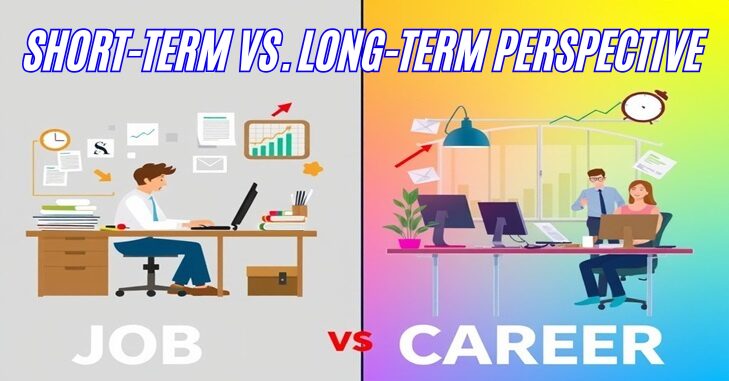
Jobs often have a limited scope and duration. You perform specific tasks within a defined role, often with little opportunity for advancement. A career, however, unfolds over time, encompassing various roles, experiences, and learning opportunities. It demands planning, goal-setting, and continuous improvement. While a job offers immediate financial gratification, a career builds long-term security and fulfillment.
Skills Acquisition and Development
Jobs typically rely on existing skills and experience. You’re hired based on what you can already do. A career, conversely, demands ongoing learning and skill development. You actively seek opportunities to expand your knowledge base, acquire new competencies, and stay ahead of industry trends. This continuous learning enhances your value to employers and empowers you to adapt to evolving job markets and pursue new opportunities.
Stability and Security
While a job can provide temporary financial stability, it can also be vulnerable to economic downturns, industry shifts, or company-specific challenges. A career emphasizing continuous learning and skill diversification offers greater resilience and security. The more expertise and experience you accumulate within your chosen field, the better equipped you are to navigate challenges and maintain employment even in uncertain times.
Financial Rewards and Benefits
Jobs often come with fixed salaries and limited benefits. Career paths, however, typically offer greater potential for increased earnings, promotions, and enhanced benefits packages. As you gain experience, expertise, and responsibility, your value to employers increases, leading to greater financial rewards and recognition.
Job Satisfaction and Fulfillment
Jobs can sometimes feel monotonous and unfulfilling, particularly if they don’t align with your interests or values. A career offers the opportunity to pursue your passions and contribute meaningfully to your chosen field. This sense of purpose and engagement can lead to greater job satisfaction, increased motivation, and a stronger professional identity.
Flexibility and Control
Jobs often have rigid schedules and little flexibility. Careers, particularly as you progress, can offer greater autonomy and control over your work environment, schedule, and projects. This flexibility can improve work-life balance and provide a greater sense of ownership over your professional life.
The Interplay Between Jobs and Careers
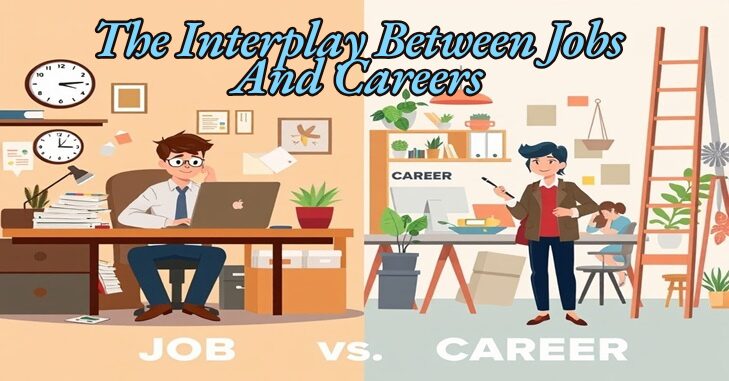
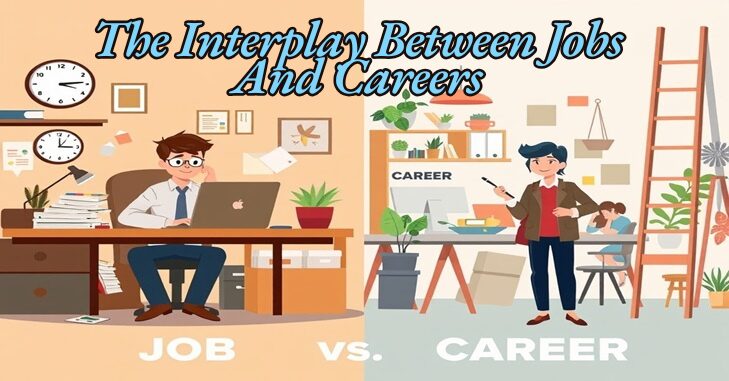
It’s important to recognize that jobs and careers are not mutually exclusive. Many careers are built upon a series of strategically chosen jobs. Even seemingly unrelated jobs can contribute valuable skills and experience that can be leveraged later in your career journey. The key is approaching each job with a career mindset, seeking opportunities to learn, grow, and build towards your long-term goals.
Cultivating a Career Mindset
Even if you’re in a job that doesn’t feel like a “dream career,” you can still cultivate a career mindset. This involves actively seeking opportunities for growth and development within your current role, even if they seem small. Volunteer for new projects, shadow colleagues in different departments, or take on additional responsibilities that stretch your skills. Network with people in your industry, attend conferences and workshops, and stay abreast of industry trends.
By demonstrating initiative and a commitment to learning, you increase your value to your current employer and position yourself for future career advancement. Remember, every job can be a stepping stone towards a more fulfilling career if you approach it with the right mindset. Focus on building transferable skills, expanding your network, and continuously seeking opportunities to learn and grow. This proactive approach will empower you to take control of your professional trajectory and create a career that aligns with your passions and aspirations.
Conclusion
Ultimately, the journey from a job to a career is personal, shaped by individual aspirations, values, and commitment to growth. While a job provides immediate financial stability, a career offers the potential for long-term fulfillment, professional development, and a deeper sense of purpose. By embracing a proactive mindset, continuously developing in-demand skills, and strategically navigating the evolving nature of work, you can transform a series of jobs into a fulfilling and rewarding career journey.
Whether you follow a traditional career path or forge your own unique professional trajectory, the key is cultivating a growth mindset and actively investing in your long-term professional development. By understanding the fundamental differences between a job and a career, you can make informed choices that align with your goals and pave the way for a successful and meaningful professional life.
Apart from that if you want to know about “Comprehensive Guide Unveiling Facts About Steve Hutchinson’s Wife” then please visit our “Entertainment” Category.
Frequently Asked Questions (FAQs)
An example of a job or career is a software developer. Software developers design, code, and test software applications and systems. They develop everything from mobile apps to complex operating systems across various industries.
Occupation refers to a broad category of work that someone might do, such as teaching or engineering. Job is a specific position or role that someone holds within an occupation, like being a math teacher at a high school.
Here are the main difference between a job and work. A job is a specific position or role that someone holds within a company or organization, often with defined tasks and responsibilities. Work, on the other hand, is any activity involving mental or physical effort done in order to achieve a purpose or result.
People may choose jobs for immediate income, flexibility, or short-term needs without long-term professional commitments.
A job is usually a short-term role done primarily to earn money, while a career represents a long-term professional journey focused on growth and development.