
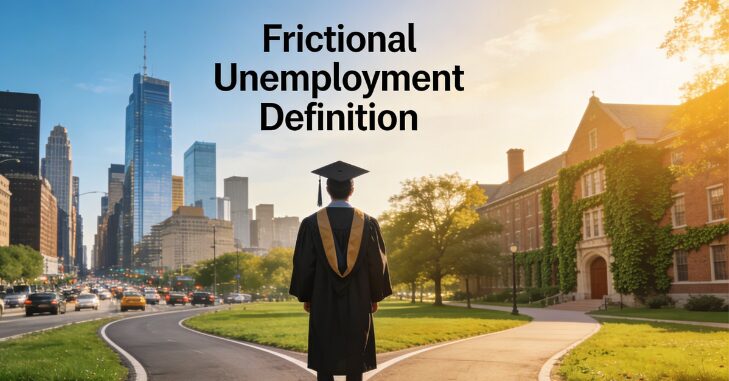
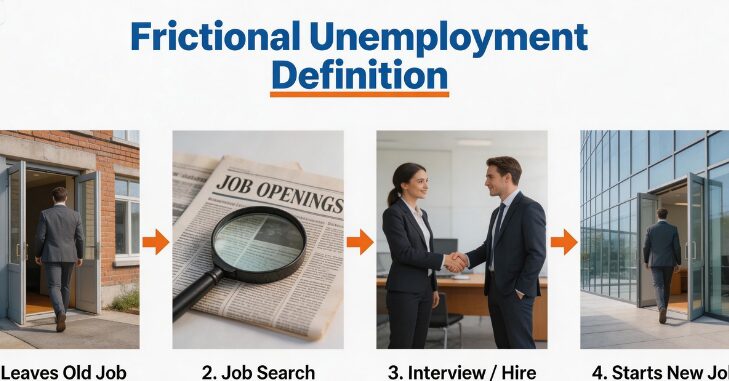
The frictional unemployment definition refers to a type of unemployment that occurs when individuals are temporarily without a job while transitioning between positions or searching for their first employment opportunity. It usually happens when workers voluntarily leave their current jobs to find better career opportunities, relocate to a new area, or change their professional path.
Unlike other forms of unemployment that arise from economic downturns or structural issues in the labor market, frictional unemployment is generally short-term and often considered a natural part of a healthy economy. Understanding the frictional unemployment definition helps economists, policymakers, and businesses analyze labor market dynamics, workforce mobility, and the factors that influence job transitions.
| Keyword | Summary |
| Basic Concept | Job Transition Unemployment |
| Definition | Between Jobs Period |
| Nature | Short-Term Unemployment |
| Job Changes | Voluntary Job Switch |
| Labor Market | High Turnover Flow |
| Skill Development | Training Opportunity Period |
| Main Causes | Job Search Time |
| Career Changes | New Career Path |
| Seasonal Work | Off-Season Employment Gap |
| Geographic Mobility | Relocation Job Search |
| Economic Factors | Economic Growth Impact |
| Labor Information | Job Market Awareness |
| Education Level | Skills & Qualifications |
| Technology Impact | Changing Job Requirements |
| Economic Role | Labor Market Efficiency |
| Career Impact | Personal Development Opportunity |
| Policy Focus | Workforce Support Programs |
| Management Strategies | Job Placement Services |
| Skills Improvement | Training Programs |
| Information Systems | Labor Market Data |
Frictional Unemployment Definition

Frictional unemployment definition is the unemployment that occurs when people are between jobs or searching for their first job. It occurs when individuals voluntarily leave their current positions to seek better opportunities, change careers, or relocate. This form of unemployment is considered short-term, as it typically lasts for a few weeks or months while individuals search for new employment.
Frictional unemployment is distinct from other forms of unemployment, such as structural or cyclical unemployment, which arise from deeper issues in the economy or labor market. While frictional unemployment can reflect inefficiencies within the job market, such as mismatches between workers’ skills and job requirements, it is generally viewed positively, as it indicates that workers are pursuing roles that better align with their skills and ambitions.
Key Characteristics of Frictional Unemployment
Several key characteristics define frictional unemployment, making it distinct from other forms of unemployment.
Temporary Nature
One of the most significant characteristics of frictional unemployment is its temporary nature. Individuals are typically unemployed for a short period while they seek new job opportunities, making this type of unemployment a transient phase rather than a long-lasting condition.
Voluntary Job Changes
Frictional unemployment often results from voluntary job changes. This can include employees who leave their positions to pursue better opportunities, relocate to different regions, or return to school for further education. The voluntary aspect highlights the positive choice individuals make in seeking roles better suited to their aspirations or skill sets.
High Turnover Rates
In a healthy economy, frictional unemployment often corresponds to high labor market turnover. As people frequently enter and exit jobs, there is a continuous flow of individuals seeking new employment, creating openings, and facilitating workforce transitions.
Skill Development
Frictional unemployment can serve as a period for skill development and career exploration. While unemployed, individuals may seek additional training or education, increase their employability, and enhance their skill sets, ultimately benefiting both the individual and the economy.
Causes of Frictional Unemployment

Frictional unemployment can arise from various causes, reflecting the multifaceted nature of job transitions.
- Job Search Duration: One of the primary causes of frictional unemployment is the time required for individuals to search for new jobs. The job search process involves researching available positions, preparing applications, and attending interviews. The time it takes to secure a job can lead to temporary unemployment, especially when job seekers are selective about their next opportunity.
- Career Changes: Individuals may seek to change careers for numerous reasons, including dissatisfaction with their current job, a desire for more challenging work, or a pursuit of passions. This career transition often results in the individual voluntarily leaving their current job while they search for a more suitable position.
- Seasonal Employment: Certain industries exhibit seasonal employment patterns, leading to frictional unemployment during off-peak seasons. For example, workers in agriculture or tourism may find themselves temporarily unemployed during seasonal transitions, even though they intend to return to similar positions.
- Geographic Mobility: Frictional unemployment can also result from geographic mobility. When individuals move to new locations, they may experience temporary unemployment while seeking job opportunities in their new area. This movement often reflects personal circumstances, such as family relocations or a desire for a better quality of life.
Factors Contributing to Frictional Unemployment
Multiple factors can contribute to the prevalence and impact of frictional unemployment in the labor market.
Economic Conditions
The overall health of the economy plays a vital role in frictional unemployment rates. During periods of economic growth, job openings increase, making it easier for individuals to transition between roles. Conversely, economic downturns may prolong job searches, thereby affecting the level of frictional unemployment.
Labor Market Information
Access to labor market information significantly influences the level of frictional unemployment. When individuals are well-informed about available job opportunities, salaries, and required skills, the transition between jobs is more efficient. Poor access to this information can prolong unemployment periods.
Education and Training
Education and skill levels impact workers’ employment prospects. Individuals with higher levels of education or specialized skills typically experience shorter periods of frictional unemployment due to the demand for their expertise. In contrast, those lacking relevant skills may face more prolonged job searches.
Technological Changes
Advancements in technology can lead to frictional unemployment as workers adjust to new job requirements or seek roles in emerging industries. Workers may take time to acquire new skills or adapt to changing job markets, leading to temporary unemployment.
Implications of Frictional Unemployment
Frictional unemployment has several implications for individuals, businesses, and the broader economy.
- Labor Market Efficiency: Frictional unemployment reflects a certain level of labor market efficiency. A dynamic labor market where individuals are willing to change jobs for better opportunities can lead to a more productive workforce. As workers find roles that better align with their skills and interests, overall economic productivity may increase.
- Economic Growth: On aggregate, frictional unemployment can facilitate economic growth. When individuals shift to roles better aligned with their skills, the economy benefits from enhanced productivity and innovation. Companies can leverage a talented workforce to drive competitiveness and growth.
- Individual Career Development: For individuals, frictional unemployment may create opportunities for personal development and career advancement. The job search phase allows individuals to reassess their skills, enhance their qualifications, and refine their career objectives, ultimately leading to greater long-term job satisfaction.
- Policy Considerations: Policymakers must consider frictional unemployment when designing labor market policies. Effective workforce development programs, job training, and resources to enhance access to labor market information can help reduce the duration of frictional unemployment and support individuals during their transitions.
Managing Frictional Unemployment
Various strategies can be employed to manage and reduce frictional unemployment, enhancing the efficiency of the labor market.
Effective Job Placement Services
Job placement agencies can assist individuals in their job searches by providing tailored services that match their skills and preferences with available positions. These services can streamline the transition process and reduce periods of frictional unemployment.
Career Counseling and Guidance
Career counseling can empower individuals to make informed decisions regarding their career paths. Professional guidance can help individuals identify skills, research job market trends, and prepare effectively for interviews, ultimately facilitating faster job transitions.
Skills Training Programs
Governments and organizations can offer skills-training programs that equip job seekers with the competencies needed for in-demand roles. By enhancing skill sets, individuals may experience shorter periods of frictional unemployment and improved employment prospects.
Employer Engagement
Employers can help reduce frictional unemployment by engaging with job seekers and adopting flexible hiring practices. Strategies such as internships, apprenticeships, and part-time positions can provide individuals with opportunities to gain relevant experience while actively searching for full-time employment.
Labor Market Information Systems
Efficient labor market information systems that provide real-time data on job openings, salaries, and Career development opportunities are essential for minimizing frictional unemployment. When individuals have access to accurate and timely information, they can make better-informed decisions about their job searches.
Conclusion
Frictional unemployment definition is an inherent and often beneficial aspect of the labor market, reflecting individuals’ transitions between jobs and their pursuit of better opportunities. Understanding its definition, key characteristics, causes, contributing factors, and implications is essential for recognizing its role in economic dynamics.
While frictional unemployment can create challenges, it also presents opportunities for career advancement and economic growth. By effectively managing and reducing frictional unemployment through job placement services, skills training programs, and improved access to labor market information, stakeholders can enhance labor market efficiency and support individuals in their career journeys. Ultimately, a well-functioning labor market that accommodates frictional unemployment fosters a productive and dynamic economy, benefiting both individuals and society at large.
Want to know about What Does OPS Stand For? A Comprehensive Guide Check out our Business category.
FAQs
The fluctuations in the economy over time lead to cyclical unemployment. Many of the jobs lost during a recession are classified as cyclical unemployment. Normal labor-market turnover and the time it takes for workers to find new jobs are the causes of frictional unemployment.
When people are momentarily unemployed while changing jobs, it’s known as frictional unemployment. It is usually regarded as a normal, transient type of unemployment and is not a major concern.
The unemployment rate among aerospace engineers following the 1970s reduction in the U.S. space program is an illustration of the latter. High school dropouts are an illustration of the latter. Long-term, persistent, and challenging to lower is structural unemployment.
A brief period of unemployment known as frictional unemployment” occurs when people voluntarily quit their jobs in search of new ones or are joining the workforce for the first time. Personal choices, rather than economic downturns, usually drive it.