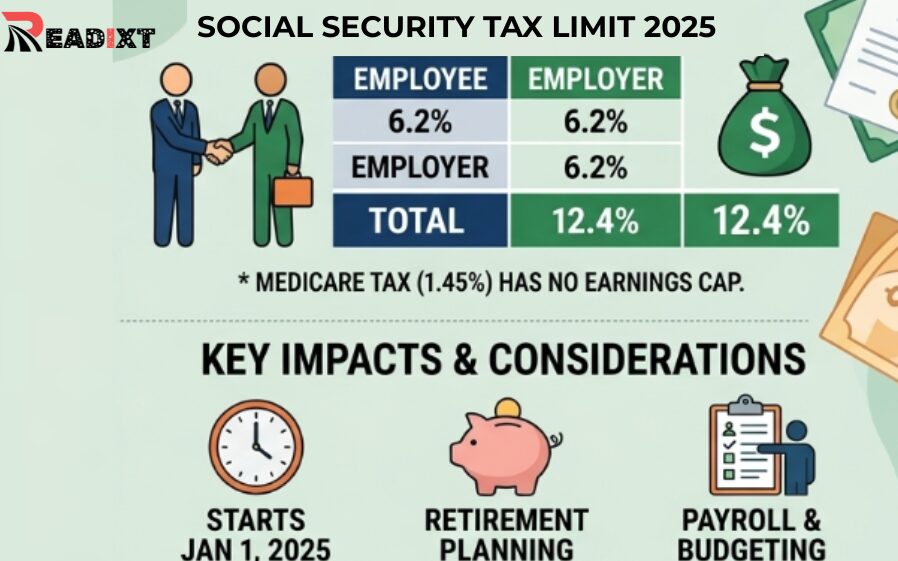
Understanding the social security tax limit 2025 is important for employees, employers, and self-employed individuals who want to manage their income and tax obligations effectively. Each year, the U.S. government adjusts the maximum amount of earnings subject to Social Security taxes. This adjustment helps maintain the long-term stability of the Social Security system while reflecting national wage growth. For the full picture, read Google Ghost Game.
For 2025, the maximum taxable earnings subject to Social Security payroll taxes are expected to increase compared with previous years. Workers who earn above this income threshold stop paying Social Security tax on any additional earnings once the limit is reached. This rule primarily affects middle- and high-income earners, payroll departments, and financial planners who monitor annual tax changes closely.
This article provides a detailed explanation of the social security tax limit 2025, including the taxable wage base, payroll deductions, effects on high-income workers, and how the tax limit influences retirement benefits and overall financial planning.
| Category | Details |
| Tax Year | 2025 |
| Maximum Taxable Earnings | Approximately $174,900 |
| Employee Social Security Tax Rate | 6.2% of taxable wages |
| Employer Social Security Tax Rate | 6.2% of taxable wages |
| Total Contribution Rate | 12.4% combined employee and employer |
| Self-Employed Tax Rate | 12.4% on taxable earnings |
| Tax Applied To | Wages, salaries, and self-employment income |
| Earnings Above Limit | Not subject to Social Security tax |
| Medicare Tax Limit | No income cap (applies to all earnings) |
| Who Is Most Affected | High-income employees and self-employed individuals |
Understanding Social Security Payroll Taxes

Before exploring the social security tax limit 2025, it is helpful to understand how Social Security payroll taxes work. The Social Security program in the United States is funded through payroll taxes collected under the Federal Insurance Contributions Act (FICA). These taxes help finance retirement benefits, disability benefits, and survivor benefits for millions of Americans.
Workers contribute a percentage of their wages toward Social Security during their working years. These contributions help support current beneficiaries while also building eligibility for the worker’s own future benefits.
Key components of Social Security payroll taxes
- Taxes collected through FICA payroll deductions
- Shared contributions between employees and employers
- Additional rules for self-employed individuals
- Annual taxable income limits set by the government
The annual income threshold determines how much of a worker’s earnings are subject to Social Security taxes.
What Is the Social Security Tax Limit?
- The Social Security tax limit refers to the maximum earnings subject to Social Security payroll tax in a given year.
- Once an employee’s income reaches the wage base limit, additional earnings are not taxed for Social Security for the remainder of that year.
- This limit exists because Social Security benefits are calculated based on taxable wages up to a certain level.
- Adjusted annually based on national wage trends
- Applies to employees and self-employed individuals
- Only affects Social Security tax, not Medicare tax
- Primarily impacts higher-income earners
- For 2025, the taxable wage base is projected to be around $174,900, with final figures determined annually by the Social Security Administration.
Payroll Deduction Rates for Social Security
Workers contribute a fixed percentage of their wages toward Social Security taxes until they reach the annual income cap.
Current payroll tax rates
| Category | Contribution Rate |
| Employee Contribution | 6.2% |
| Employer Contribution | 6.2% |
| Total Contribution | 12.4% |
| Self-Employed Contribution | 12.4% |
Employees pay 6.2% of their wages, and employers contribute an equal amount. Self-employed individuals are responsible for paying both portions, although they may receive certain tax deductions. These contributions apply only to earnings up to the maximum wage base for the year.
Social Security Tax Limit 2025

The Social Security tax limit for 2025 determines how much income is subject to Social Security payroll taxes during the year. The estimated figures for 2025 indicate that the maximum taxable earnings will be approximately $174,900, with both the employee and employer Social Security tax rates set at 6.2%.
This means that once a worker’s income exceeds this wage base, additional earnings are no longer subject to the Social Security portion of payroll taxes. For example, if an employee earns $200,000 annually, only the first $174,900 of that income would be taxed for Social Security purposes.
Why the Tax Limit Changes Each Year?
The wage base limit increases periodically to reflect changes in national wage levels and economic conditions.
Factors influencing annual adjustments
- Growth in average national wages
- Inflation and economic conditions
- Funding requirements for Social Security programs
These adjustments ensure that the Social Security system continues to collect sufficient payroll taxes to support current and future beneficiaries.
Impact on High-Income Workers
- One of the most significant effects of the Social Security tax limit for 2025 is on individuals who earn above the annual wage cap.
- Payroll taxes stop once the wage cap is reached.
- Higher-income workers may see reduced deductions later in the year.
- Total Social Security contributions are capped annually.
- For example, if a high-income employee reaches the taxable earnings limit by mid-year, their payroll deductions for Social Security will stop for the rest of the year.
- This change often results in a noticeable increase in take-home pay during later pay periods.
Differences Between Social Security Tax and Medicare Tax
| Key Differences | Social Security Tax | Medicare Tax |
| Wage Cap Application | Applies only up to the wage base limit | Applies to all earned income |
| Taxation Limit | Stops once earnings reach the cap | Has no maximum wage limit |
| Additional Tax | N/A | High-income individuals may pay an additional Medicare tax once their income exceeds certain thresholds |
Historical Changes in the Wage Base
The Social Security taxable wage base has steadily increased over the decades.
Examples of previous limits
- 2021: $142,800
- 2022: $147,000
- 2023: $160,200
- 2024: $168,600
These increases reflect rising wages across the United States economy.
Benefits of the Wage Cap System
The income limit within the Social Security program provides several significant advantages. It helps maintain a balance between contributions and benefits, ensuring that individuals receive fair returns on their investments in the system. Furthermore, the limit protects middle-income workers from being subjected to unlimited payroll taxes, making the tax burden more manageable. Elsewhere on the site: 7 handyman Small Projects With A Visible Impact.
Additionally, it supports the long-term sustainability of the program by allowing predictable contributions, which helps maintain fairness in the social security system. By setting a cap on taxable earnings, the framework fosters a more equitable approach to funding, benefiting both the contributors and the program as a whole.
Planning Financial Strategies Around the Tax Limit
Workers who earn above the taxable wage base may use financial planning strategies to manage their tax obligations.
Strategies often include
- Retirement contributions
- Tax-efficient investment planning
- Income diversification
Understanding payroll tax limits can help individuals plan their finances more effectively throughout the year.
How the Tax Limit Affects Retirement Benefits
While the tax limit determines how much income is taxed, it also influences the calculation of Social Security benefits. Benefits are calculated using average indexed monthly earnings, which are based on taxable wages throughout a worker’s career. Higher earnings generally lead to higher benefits, but the benefit formula is progressive and designed to favor lower-income workers.
Challenges Facing the Social Security System

Although payroll taxes support the system, long-term funding challenges remain.
Major concerns include
- Increasing life expectancy
- Aging population
- Lower worker-to-retiree ratios
Policymakers often debate potential reforms such as increasing the wage cap or adjusting benefit formulas.
Importance of Staying Informed
Understanding the social security tax limit 2025 helps workers anticipate changes in their paychecks and tax obligations. Employees, employers, and financial advisors should review annual updates to ensure accurate payroll planning and financial decision-making. Keeping track of wage base changes can help individuals better manage their earnings, savings, and retirement strategies.
Conclusion
The social security tax limit 2025 plays an important role in determining how much income is subject to Social Security payroll taxes. By setting a maximum taxable wage base, the system ensures that workers contribute fairly while maintaining a balance between contributions and future benefits.
For high-income workers, the wage cap means payroll taxes stop once their earnings exceed the annual limit, potentially increasing take-home pay later in the year. Employers must also carefully track employee wages to ensure accurate tax deductions and compliance with federal regulations.
As the economy and workforce continue to evolve, annual adjustments to the wage base will remain an essential part of maintaining the long-term sustainability of the Social Security system. Understanding these changes allows individuals to plan more effectively for taxes, retirement savings, and long-term financial security.
If you want to read an interesting article about it, explore our Finance category.
FAQs
Yes, self-employed workers must pay both the employee and employer portions of Social Security tax, which equals 12.4% of their taxable income up to the annual limit.
No, the Social Security tax only applies to earnings up to the annual wage cap. Once a worker’s income reaches the yearly limit, additional income is no longer subject to Social Security tax.
Employees pay 6.2% of their wages toward Social Security taxes, while employers contribute an additional 6.2%, bringing the total contribution to 12.4% on earnings up to the annual wage base.
The Social Security tax limit for 2025 is expected to be around $174,900, meaning only earnings up to this amount are subject to Social Security payroll taxes. Income earned above this limit is not taxed for Social Security purposes.